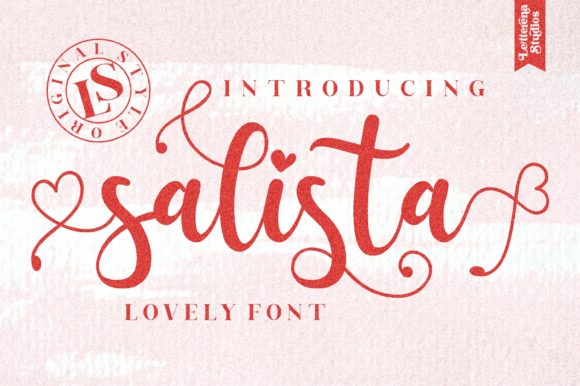
Salista: A Sweet and Delicate Handwritten Font for Creative Projects
Salista is a sweet and delicate handwritten font that brings a personal, romantic touch to any design project. Its dainty and joyful style makes it ideal for wedding invitations, greeting cards, and other creative works where a sense of intimacy and charm is essential. As a PUA encoded font, Salista offers easy access to all its beautiful glyphs and swashes, enhancing the visual appeal of your text with minimal effort.
Understanding the Role of Salista in Design Workflows
Fonts like Salista are not just decorative elements; they play a crucial role in the overall design process. They influence readability, tone, and the emotional impact of a message. In professional settings, choosing the right font can significantly affect how your content is perceived by the audience. Salista fits seamlessly into workflows where a personalized and elegant aesthetic is desired.
Whether you're designing a wedding invitation or creating marketing materials, Salista's unique characteristics make it a versatile choice. Its soft curves and natural handwriting style give a sense of warmth and authenticity that digital fonts often lack. This makes it particularly useful in projects that require a human touch, such as thank-you notes, birthday cards, or promotional materials for boutique businesses.
Integrating Salista into Your Creative Process
Incorporating Salista into your design workflow can be done at various stages of a project. Before beginning a design task, consider how Salista might enhance the visual narrative of your content. It's especially effective when paired with minimalist layouts, pastel color schemes, or illustrations that reflect a similar aesthetic.
During the design phase, Salista can be used to create headings, signatures, or accents that draw attention without overwhelming the viewer. Its PUA encoding allows for easy customization, enabling you to access special characters and swashes that add a unique flair to your text. This feature is particularly beneficial for designers who want to add subtle variations to their typography without complicating the layout.
After completing a design, it's important to review how Salista contributes to the overall composition. Does it support the intended message? Is it legible across different devices and screen sizes? These considerations ensure that Salista remains an asset throughout the entire creative process.
Practical Implementation Tips for Using Salista
To make the most of Salista, start by selecting appropriate use cases. For instance, if you're working on a wedding invitation, pair Salista with complementary fonts for body text to maintain readability while preserving the romantic feel. Similarly, for business cards or social media posts, use Salista sparingly to highlight key information without distracting from the main content.
When working with digital tools like Adobe Illustrator or Canva, ensure that Salista is properly installed and accessible within your software. Familiarize yourself with the PUA encoding features to unlock all the glyphs and swashes available. This will allow you to experiment with different typographic styles and find the perfect fit for your project.
For long-term use, consider organizing your font library to include Salista alongside other similar fonts. This helps streamline your workflow and ensures that you can quickly access the right typeface whenever needed. Additionally, keep track of how Salista performs across different platforms and file formats to avoid compatibility issues.
Enhancing Creativity with Salista
Salista's versatility extends beyond traditional print media. It can also be used in digital content creation, such as blog headers, email signatures, or website banners. The font's delicate appearance complements modern web design trends that emphasize clean lines and organic shapes.
Another creative application is using Salista in branding materials. Small businesses or independent creators can leverage this font to develop a distinctive visual identity that stands out in a crowded market. Whether it's for logos, packaging designs, or promotional flyers, Salista adds a personal touch that resonates with customers.
Moreover, educators and content creators can benefit from using Salista in learning materials or instructional guides. Its friendly and approachable style makes it suitable for educational resources aimed at younger audiences or those seeking a more engaging reading experience.
Workflow Integration and Compatibility Considerations
When integrating Salista into your workflow, it's important to assess how well it interacts with other design elements. Ensure that the font's size, spacing, and weight align with the rest of your layout. Avoid using too many different fonts in one design, as this can create visual clutter and reduce the effectiveness of your message.
Compatibility is another key factor to consider. While Salista is widely supported by most design software, always test it on different platforms to confirm that it renders correctly. This is especially important if you're sharing your work online or printing it professionally.
Additionally, think about how Salista can be used in collaboration with other tools and resources. For example, pairing it with vector graphics or photographs can help create cohesive and visually appealing compositions. Exploring different combinations will allow you to discover new ways to incorporate Salista into your creative projects.
Lastly, maintaining consistency in your use of Salista is essential for building a strong brand identity or ensuring a polished final product. Establish guidelines for when and how to use the font, and follow them consistently across all your work. This will help reinforce the visual theme and ensure that your designs remain professional and aesthetically pleasing.